Showing posts with label home forclosures. Show all posts

Friday, September 21, 2012

ON DECEMBER 8, 2008, NEIL BAROFSKY WAS CONFIRMED AS TROUBLED ASSET PROGRAM (TARP) WATCHDOG. SEVEN MONTHS LATER HE ESTIMATED THAT THE $700 BILLION BAILOUT COULD BALOON TO $23.7 TRILLION! ACCOUNTABILITY WASN'T MANDATED BY TARP. INSTEAD OF LENDING TO STRUGGLING AMERICAN BUSINESSES, THE TOO-BIG-TO-FAIL BANKS WERE HOARDING OR USING THE MONEY FOR SPECULATIVE INVESTING. BAROFSKY HAD NO ENFORECEMENT POWER. MILLIONS OF HOME OWNERS WERE DEFRAUDED. GEITHNER BEARS FULL RESPONSIBILITY. ORDINARY PEOPLE WERE SOLD OUT AND LIED TO. WALL STREET CRIMINALS POCKETED THE BAILOUT MONIES AND PASSED THE BILL TO THE TAXPAYERS.


September 21, 2012 at 01:38:05

Promoted to Headline (H3) on 9/21/12:     Permalink


Bailout Fraud and Unaccountability

By (about the author)

opednews.com


Bailout Fraud and Unaccountability
TARP watchdog exposes fraud.

by Stephen Lendman

On December 8, 2008, the Senate confirmed Neil Barofsky's nomination as Troubled Asset Relief Program (TARP) watchdog. He assumed the post of SIGTARP (Special Inspector General for TARP).

On July 20, 2009, he estimated the $700 billion bailout fund could balloon to $23.7 trillion. Obama administration secrecy conceals what's essential to reveal. Over $9 trillion is known. Some analysts think true figures may be three times that amount. Only crooked bankers and corrupt bureaucrats know for sure.

In February 2009, Barofsky submitted an initial report to Congress. In the past two months, he said, Washington handed out hundreds of billions of dollars (like confetti) to troubled financial institutions.

Where did the money go, he asked? What assurances exist that it's not stolen or wasted?

TARP didn't require recipients to report or internally track funds used. Accountability wasn't mandated. Banks took full advantage. Instead of loans to stimulate recovery, they hoarded cash, acquired other financial institutions, paid off debt, speculated, and knew then and now there's plenty more help for the asking.

Fraud prevention standards weren't imposed. Barofsky doubts the program's longterm success.

On March 29, 2011, he headlined a New York Times op-ed "Where the Bailout Went Wrong," saying:

Two and a half years after legislation passed, Obama officials declared mission accomplished. "On my last day as the special inspector general".I regret to say that I strongly disagree."

TARP and what followed struck out. It "failed to meet some of its  most important goals." Main Street was sacrificed for  Wall Street.

Congress was told TARP funds would buy up to $700 billion of mortgages. Authorizing legislation (the Emergency Economic Stabilization Act - EESA) emphasized preserving homeownership.

Treasury officials promised help. EESA mandated it. Struggling homeowners got none. Legislative provisions were violated. Treasury changed the rules. Money went to banks with no accountability or mandate to extend credit.
"There were no strings attached: no requirement or even incentive to increase lending to home buyers, and against our strong recommendation, not even a request that banks report how they used TARP funds."
Instead of increased lending, it declined. As inspector general, Barofsky had no enforcement power. He could only recommend. Suggested policies fell on deaf ears. Treasury and Wall Street conspired to commit grand theft. Ordinary people were hung out to dry and scammed.

Helping homeowners was shelved. The Home Affordable Modification Program (HAMP) was introduced. Obama promised four million families help. The program was "a colossal failure."

It was designed to fail. Its provisions included no accountability. Guidelines only were provided. Banks and other mortgage services ignored them. Foreclosures mounted. Millions of homeowners were defrauded. Nothing changed to this day.
One of HAMP's most pernicious abuses was letting servicers "direct borrowers who were current on their mortgages to start skipping payments, telling them that that would allow them to qualify for a HAMP modification," said Barofsky. "Homeowners who might have been able to ride out the crisis instead ended up in long trial modifications, after which servicers would deny them a permanent modification and send them an enormous 'deficiency' bill." "Borrowers who might otherwise never have missed a payment found themselves hit with whopping bills that they couldn't pay and now faced foreclosure. It was a disaster."
Geithner bears full responsibility. Understating problems, he admitted solutions "won't come close" to expectations. He refused to address glaring shortfalls. He abandoned Main Street for Wall Street. He's complicit in grand theft. He and banker cronies belong in prison.

Banks know they can steal with impunity. They're larger and more powerful now than when crisis conditions erupted. They can speculate recklessly. They'll be bailed whenever they get in trouble.

Treasury "ignore(d) rather than support(ed) real" reforms. Its "broken promises" turned TARP and other programs into a giant Wall Street "giveaway."

Its "mismanagement" and criminal complicity "damaged the credibility of the government"." Conditions are so out of control that future policy makers may be unable "to save the system the next time a crisis arises."

Perhaps that's TARP's "most lasting, and unfortunate, legacy."

Barofsky's new book "Bailout: An Inside Account of How Washington Abandoned Main Street While Rescuing Wall Street" explains. 

Writer/Roosevelt Institute fellow Matthew Stoller calls it "a very important" account of the financial crisis aftermath. In April 2010, Barofsky met a key adversary.

Herbert Allison formerly headed Merrill Lynch, TIAA-CREF and Fannie Mae. He came out of retirement to oversee TARP. He became Assistant Treasury Secretary for Financial Stability.
"Have you thought at all about what you'll be doing next," he asked. "Out there in the market, there are consequences for some of the things you're saying and the way you're saying them."
Barofsky knew he was being threatened "with lifelong unemployment." Going along instead of bucking the system assures revolving door plum positions. "It was gold or the lead," he explained.

Cooperate and get rich. Don't and lose out. At first, he "had no idea that the US government had been captured by" bankers. He was "shocked (at) how much control" they have over policy on their own terms. Treasury goes along deferentially. Republicans or Democrats agree on core issues.

He was hijacked and hamstrung. Too big to fail constitutes near omnipotence. Whatever Wall Street wants it gets. Contesting its power is futile.
Stoller calls "Bailout" an account of "the importance of Congressional oversight in reigning in corruption, and the problems of our imperial Presidency."
Barofsky hoped for press and congressional attention. "Our message was simple," he said. "Treasury's desperate attempt to bail out Wall Street was setting the country up for potentially catastrophic losses."

Throughout his tenure, he was obstructed. He faced road blocks, ambushes, trench warfare, and threats in trying to do his job.

On arrival at Treasury, he saw ornate large offices given top officials. He got a small, foul-smelling basement one with barred windows. He spent most of the next three years there. He wasn't welcome unless he played ball. It's not his style and he refused.

He explained what he saw graphically. Homeowners were abandoned and scammed. A tsunami of evictions, foreclosures, fraud, mortgage document robo-signings, blighted neighborhoods, and homelessness continues without relief.

Taxpayers got the bill. Bankers got benefits. So did lobbyists and go-along politicians. The combination of Treasury criminality, White House complicity, congressional laxity, and regulatory failure keeps the dirty game going.

Since crisis conditions erupted five years ago, ordinary people were sold out and lied to. Obama exceeded the worst Bush administration policies. Political corruption is rampant.

Barofsky's best efforts failed. Attempts to achieve accountability, transparency, controls, and consumer protections proved no match for entrenched bureaucratic power, privilege and complicity with Wall Street.

He issued numerous reports. Geithner and other Obama officials buried them. Media scoundrels largely ignored them.

Barofsky believes Geithner, complicit officials, and Wall Street crooks should be fired and prosecuted. Don't expect it as long as criminals run America.

Five years after crisis conditions erupted, no top Wall Street or government official faced charges. Unaccountability is institutionalized. An eventual greater crisis looms. Unresolved problems assure it. When is anyone's guess.


Stephen Lendman lives in Chicago and can be reached at Email address removed .

His new book is titled "How Wall Street Fleeces America: Privatized Banking, Government Collusion and Class War"

http://www.claritypress.com/Lendman.html


I was born in 1934, am a retired, progressive small businessman concerned about all the major national and world issues, committed to speak out and write about them.

Wednesday, October 26, 2011

IN ICELAND THE GOVERNMENT SELLS ICELANDIC BANKS TO FOREIGN VUTURE BANKS NOW EVICTING ICELANDERS FROM THEIR HOMES ...WHILE THE GOVERNMENT REFUSES TO ALLOW ELECTIONS WHEREBY THE PEOPLE WOULD THROW THE BUMS OUT. (PRETTY MUCH SAME AS IN THE US, EXCEPT THAT THE US GOVERNMENT ALLOWS ELECTIONS ...AND THEN RIGS THEM)


  theREALnews                                                                            Permalink

October 26, 2011

Icelandic People Said No

Michael Hudson: Peoples of countries indebted without their consent should refuse to repay odious debts

More at The Real News

Saturday, October 16, 2010

Democracy Now!: As Fraud Scandal Grows, White House Opposes National Moratorium on Foreclosures


October 12, 2010


As Fraud Scandal Grows, White House Opposes National Moratorium on Foreclosures

A coalition of as many as forty state attorneys general is expected to announce Wednesday a joint investigation into the recent revelations that major lenders may have committed fraud while forcing thousands of people out of their homes. While senior congressional Democrats have joined the calls for a national moratorium on foreclosures, the White House is arguing against punishing the industry. We speak to Democratic Rep. Ed Towns of New York.
Blogger's Note: If you missed my earlier post on this subject and are interested it knowing more, check it out.


Why Are Bailed-Out Banks Breaking into Struggling Borrowers’ Homes?

Last week Florida resident Nancy Jacobini revealed that an agent hired by her bank broke into her home after she fell behind on her mortgage payments. Thinking she was being burglarized, Jacobini called 911. We speak to Jacobini’s lawyer Matthew Weidner and Bruce Marks, the founder and CEO of the Neighborhood Assistance Corporation of America, a housing services organization that’s been calling for a national moratorium on foreclosures for years.

Thursday, September 09, 2010

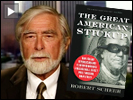
Robert Scheer: "I would say the record of Obama on [home forclosures] has been abysmal. He has been a frontman for Wall Street, and it is shocking."


Robert Scheer on The Great American Stickup: How Reagan Republicans and Clinton Democrats Enriched Wall Street While Mugging Main Street


Scheer-stickup
We speak with veteran journalist and Truthdig editor, Robert Scheer, about his latest book, The Great American Stickup: How Reagan Republicans and Clinton Democrats Enriched Wall Street While Mugging Main Street.


Go here for original, including full transcript.

Sunday, August 22, 2010

Ellen Brown: "...hordes of victims of predatory lending could end up owning their homes free and clear—while the financial industry could end up skewered on its own sword."


HOMEOWNERS' REBELLION:
COULD 62 MILLION HOMES BE FORECLOSURE-PROOF?


Over 62 million mortgages are now held in the name of MERS, an electronic recording system devised by and for the convenience of the mortgage industry. A California bankruptcy court, following landmark cases in other jurisdictions, recently held that this electronic shortcut makes it impossible for banks to establish their ownership of property titles—and therefore to foreclose on mortgaged properties. The logical result could be 62 million homes that are foreclosure-proof.

Mortgages bundled into securities were a favorite investment of speculators at the height of the financial bubble leading up to the crash of 2008. The securities changed hands frequently, and the companies profiting from mortgage payments were often not the same parties that negotiated the loans. At the heart of this disconnect was the Mortgage Electronic Registration System, or MERS, a company that serves as the mortgagee of record for lenders, allowing properties to change hands without the necessity of recording each transfer.

MERS was convenient for the mortgage industry, but courts are now questioning the impact of all of this financial juggling when it comes to mortgage ownership. To foreclose on real property, the plaintiff must be able to establish the chain of title entitling it to relief. But MERS has acknowledged, and recent cases have held, that MERS is a mere “nominee”—an entity appointed by the true owner simply for the purpose of holding property in order to facilitate transactions. Recent court opinions stress that this defect is not just a procedural but is a substantive failure, one that is fatal to the plaintiff’s legal ability to foreclose.

That means hordes of victims of predatory lending could end up owning their homes free and clear—while the financial industry could end up skewered on its own sword.

California Precedent

The latest of these court decisions came down in California on May 20, 2010, in a bankruptcy case called In re Walker, Case no. 10-21656-E–11. The court held that MERS could not foreclose because it was a mere nominee; and that as a result, plaintiff Citibank could not collect on its claim. The judge opined:
Since no evidence of MERS’ ownership of the underlying note has been offered, and other courts have concluded that MERS does not own the underlying notes, this court is convinced that MERS had no interest it could transfer to Citibank. Since MERS did not own the underlying note, it could not transfer the beneficial interest of the Deed of Trust to another. Any attempt to transfer the beneficial interest of a trust deed without ownership of the underlying note is void under California law.
In support, the judge cited In Re Vargas (California Bankruptcy Court); Landmark v. Kesler (Kansas Supreme Court); LaSalle Bank v. Lamy (a New York case); and In Re Foreclosure Cases (the “Boyko” decision from Ohio Federal Court). (For more on these earlier cases, see here, here and here.) The court concluded:
Since the claimant, Citibank, has not established that it is the owner of the promissory note secured by the trust deed, Citibank is unable to assert a claim for payment in this case.
The broad impact the case could have on California foreclosures is suggested by attorney Jeff Barnes, who writes:
This opinion . . . serves as a legal basis to challenge any foreclosure in California based on a MERS assignment; to seek to void any MERS assignment of the Deed of Trust or the note to a third party for purposes of foreclosure; and should be sufficient for a borrower to not only obtain a TRO [temporary restraining order] against a Trustee’s Sale, but also a Preliminary Injunction barring any sale pending any litigation filed by the borrower challenging a foreclosure based on a MERS assignment.
While not binding on courts in other jurisdictions, the ruling could serve as persuasive precedent there as well, because the court cited non-bankruptcy cases related to the lack of authority of MERS, and because the opinion is consistent with prior rulings in Idaho and Nevada Bankruptcy courts on the same issue.

What Could This Mean for Homeowners?

Earlier cases focused on the inability of MERS to produce a promissory note or assignment establishing that it was entitled to relief, but most courts have considered this a mere procedural defect and continue to look the other way on MERS’ technical lack of standing to sue. The more recent cases, however, are looking at something more serious. If MERS is not the title holder of properties held in its name, the chain of title has been broken, and no one may have standing to sue. In MERS v. Nebraska Department of Banking and Finance, MERS insisted that it had no actionable interest in title, and the court agreed.

An August 2010 article in Mother Jones titled “Fannie and Freddie’s Foreclosure Barons” exposes a widespread practice of “foreclosure mills” in backdating assignments after foreclosures have been filed. Not only is this perjury, a prosecutable offense, but if MERS was never the title holder, there is nothing to assign. The defaulting homeowners could wind up with free and clear title.

In Jacksonville, Florida, legal aid attorney April Charney has been using the missing-note argument ever since she first identified that weakness in the lenders’ case in 2004. Five years later, she says, some of the homeowners she’s helped are still in their homes. According to a Huffington Post article titled “‘Produce the Note’ Movement Helps Stall Foreclosures”:
Because of the missing ownership documentation, Charney is now starting to file quiet title actions, hoping to get her homeowner clients full title to their homes (a quiet title action ‘quiets’ all other claims). Charney says she’s helped thousands of homeowners delay or prevent foreclosure, and trained thousands of lawyers across the country on how to protect homeowners and battle in court.

Criminal Charges?

Other suits go beyond merely challenging title to alleging criminal activity. On July 26, 2010, a class action was filed in Florida seeking relief against MERS and an associated legal firm for racketeering and mail fraud. It alleges that the defendants used “the artifice of MERS to sabotage the judicial process to the detriment of borrowers;” that “to perpetuate the scheme, MERS was and is used in a way so that the average consumer, or even legal professional, can never determine who or what was or is ultimately receiving the benefits of any mortgage payments;” that the scheme depended on “the MERS artifice and the ability to generate any necessary ‘assignment’ which flowed from it;” and that “by engaging in a pattern of racketeering activity, specifically ‘mail or wire fraud,’ the Defendants . . . participated in a criminal enterprise affecting interstate commerce.”

Local governments deprived of filing fees may also be getting into the act, at least through representatives suing on their behalf. Qui tam actions allow for a private party or “whistle blower” to bring suit on behalf of the government for a past or present fraud on it. In State of California ex rel. Barrett R. Bates, filed May 10, 2010, the plaintiff qui tam sued on behalf of a long list of local governments in California against MERS and a number of lenders, including Bank of America, JPMorgan Chase and Wells Fargo, for “wrongfully bypass[ing] the counties’ recording requirements; divest[ing] the borrowers of the right to know who owned the promissory note . . .; and record[ing] false documents to initiate and pursue non-judicial foreclosures, and to otherwise decrease or avoid payment of fees to the Counties and the Cities where the real estate is located.” The complaint notes that “MERS claims to have ‘saved’ at least $2.4 billion dollars in recording costs,” meaning it has helped avoid billions of dollars in fees otherwise accruing to local governments. The plaintiff sues for treble damages for all recording fees not paid during the past ten years, and for civil penalties of between $5,000 and $10,000 for each unpaid or underpaid recording fee and each false document recorded during that period, potentially a hefty sum. Similar suits have been filed by the same plaintiff qui tam in Nevada and Tennessee.

By Their Own Sword: MERS’ Role in the Financial Crisis

MERS is, according to its website, “an innovative process that simplifies the way mortgage ownership and servicing rights are originated, sold and tracked. Created by the real estate finance industry, MERS eliminates the need to prepare and record assignments when trading residential and commercial mortgage loans.” Or as Karl Denninger puts it, “MERS’ own website claims that it exists for the purpose of circumventing assignments and documenting ownership!”

MERS was developed in the early 1990s by a number of financial entities, including Bank of America, Countrywide, Fannie Mae, and Freddie Mac, allegedly to allow consumers to pay less for mortgage loans. That did not actually happen, but what MERS did allow was the securitization and shuffling around of mortgages behind a veil of anonymity. The result was not only to cheat local governments out of their recording fees but to defeat the purpose of the recording laws, which was to guarantee purchasers clean title. Worse, MERS facilitated an explosion of predatory lending in which lenders could not be held to account because they could not be identified, either by the preyed-upon borrowers or by the investors seduced into buying bundles of worthless mortgages. As alleged in a Nevada class action called Lopez vs. Executive Trustee Services, et al.:
Before MERS, it would not have been possible for mortgages with no market value . . . to be sold at a profit or collateralized and sold as mortgage-backed securities. Before MERS, it would not have been possible for the Defendant banks and AIG to conceal from government regulators the extent of risk of financial losses those entities faced from the predatory origination of residential loans and the fraudulent re-sale and securitization of those otherwise non-marketable loans. Before MERS, the actual beneficiary of every Deed of Trust on every parcel in the United States and the State of Nevada could be readily ascertained by merely reviewing the public records at the local recorder’s office where documents reflecting any ownership interest in real property are kept....
After MERS, . . . the servicing rights were transferred after the origination of the loan to an entity so large that communication with the servicer became difficult if not impossible .... The servicer was interested in only one thing – making a profit from the foreclosure of the borrower’s residence – so that the entire predatory cycle of fraudulent origination, resale, and securitization of yet another predatory loan could occur again. This is the legacy of MERS, and the entire scheme was predicated upon the fraudulent designation of MERS as the ‘beneficiary’ under millions of deeds of trust in Nevada and other states.

Axing the Bankers’ Money Tree

If courts overwhelmed with foreclosures decide to take up the cause, the result could be millions of struggling homeowners with the banks off their backs, and millions of homes no longer on the books of some too-big-to-fail banks. Without those assets, the banks could again be looking at bankruptcy. As was pointed out in a San Francisco Chronicle article by attorney Sean Olender following the October 2007 Boyko [pdf] decision:
The ticking time bomb in the U.S. banking system is not resetting subprime mortgage rates. The real problem is the contractual ability of investors in mortgage bonds to require banks to buy back the loans at face value if there was fraud in the origination process.
. . . The loans at issue dwarf the capital available at the largest U.S. banks combined, and investor lawsuits would raise stunning liability sufficient to cause even the largest U.S. banks to fail . . . .
Nationalization of these giant banks might be the next logical step—a step that some commentators said should have been taken in the first place. When the banking system of Sweden collapsed following a housing bubble in the 1990s, nationalization of the banks worked out very well for that country.

The Swedish banks were largely privatized again when they got back on their feet, but it might be a good idea to keep some banks as publicly-owned entities, on the model of the Commonwealth Bank of Australia. For most of the 20th century it served as a “people’s bank,” making low interest loans to consumers and businesses through branches all over the country.

With the strengthened position of Wall Street following the 2008 bailout and the tepid 2010 banking reform bill, the U.S. is far from nationalizing its mega-banks now. But a committed homeowner movement to tear off the predatory mask called MERS could yet turn the tide. While courts are not likely to let 62 million homeowners off scot free, the defect in title created by MERS could give them significant new leverage at the bargaining table.